
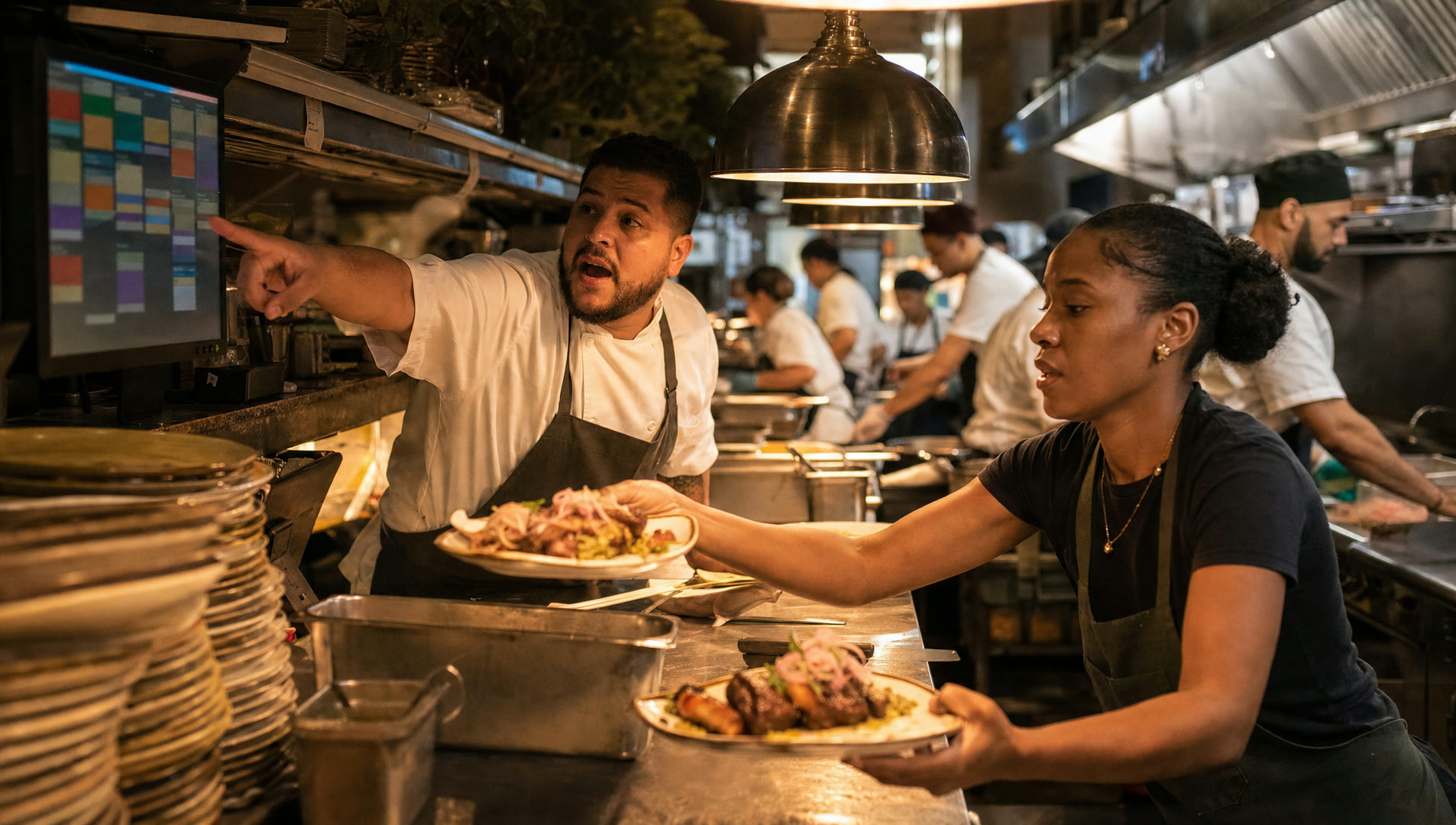
The Ops module
The whole shift on one screen — and know what every plate costs.
By the numbers
Margins are thin. Waste is real.
3–5%
is the typical restaurant profit margin — a few points of food cost or waste decide the year.
Source: Toast (citing Restaurant365), 2026
What changes with Gumbeaux
Cost and margin for every plate, with labor and fuel, before you price it.
4–10%
of food bought by foodservice kitchens is wasted before it ever reaches a guest.
Source: Leanpath (via Hotel Business), 2019
What changes with Gumbeaux
Receiving by photo, counts and par levels — and sales draw stock down.
68%
of calls to restaurants come in during the lunch and dinner rushes — when staff are busiest.
Source: Maple, 1M+ restaurant calls, 2025
What changes with Gumbeaux
One board for the rush: orders, bookings, calls and sold-outs — tap to act.
Industry research about restaurants in general, shown with its source — not results from Gumbeaux Soft customers.
Time back
What disappears from your day
Walking to five screens
To find out what’s happening.
One board.
Keying in receipts
Into inventory and again into the books.
Snap the receipt.
Guessing food cost
By feel.
Cost per plate, always current.
Paper checklists
On the wall, half done.
On a phone, logged per person.
How it works
From the delivery to the plate
The supplier delivers
Snap the receipt; stock and expenses update.Costs roll up
Recipes, yields, labor and fuel — cost and margin per plate.Service runs on one board
Orders, bookings, calls and sold-outs, tap to act.Sales draw stock
Items sell out at your threshold, everywhere at once.
Ops board · Dinner
Friday 6:42 pm
Order 1043 · pickup
Ready6:55
Incoming call
Callingnow
Brisket
LowHarper, party of 12
Arriving7:00
Features
Every feature in Ops
Ops board
Recipes, costing & margin
Inventory & receiving by photo
Checklists & tasks
No silos
What Ops connects to
Questions